


Boring with indexable drills
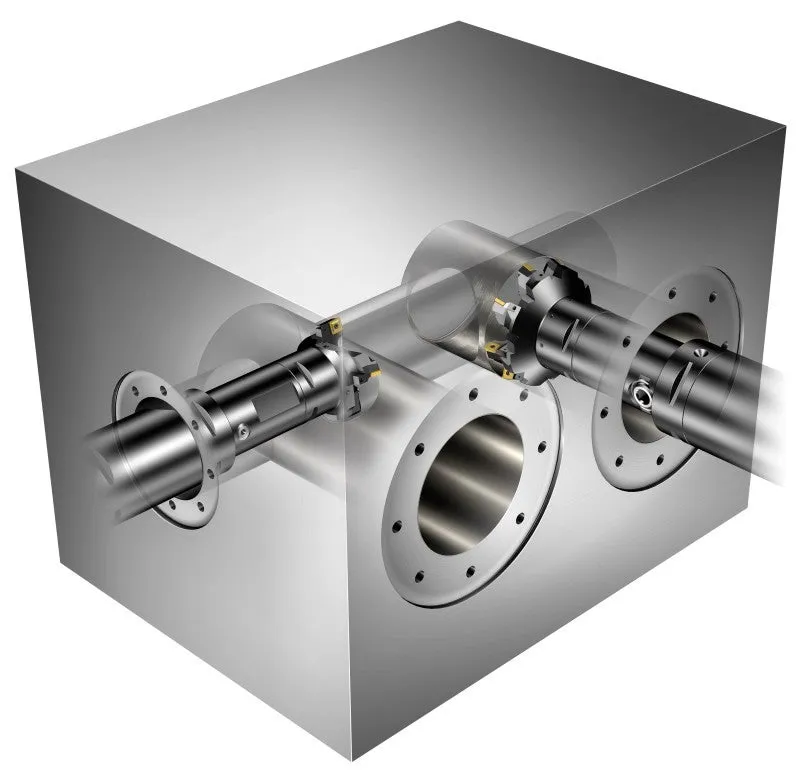
Indexable insert drills can be used in boring operations in order to save tool changing time.
Boring with indexable insert drills
Enlarging a hole can be done using a larger drill. Boring with a non-rotating drill can be performed the same way, or by off-setting the tool radially. A shorter drill will cope with this operation better, because it is less prone to vibration and able to operate at higher feeds. The maximum depth for boring operations should be limited to 75% of the insert to avoid drill deflection.
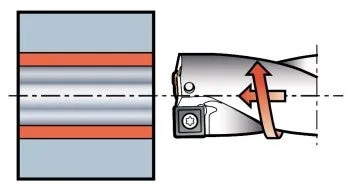
Boring with a larger drill.
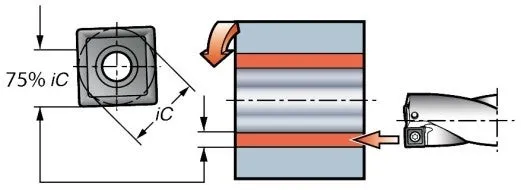
A non-rotating drill can also be off-set radially.
Radial Adjusted Drilling
Radial adjusted drilling explains how to use indexable insert drills with radial offset and presetting to enlarge holes, improve tolerances, and machine chamfers or tapers in both rotating and non-rotating applications. chevron_right
Non-Rotating Drilling Alignment
This article describes how to align non-rotating drills and control turret deflection to achieve correct hole size and minimise tool wear. chevron_right
Circular Ramping Drills
This text explains how and when to use circular ramping with indexable insert drills for holemaking operations. chevron_right
Drilling Wear Troubleshooting
This article explains common drilling wear types and provides troubleshooting guidance for indexable insert, exchangeable-tip and solid carbide drills. chevron_right
