

How innovation stays in motion
The conditions have also evolved: new materials, stricter regulations, digital transformation, and rising expectations for productivity and sustainability now define the industry. In this environment, research and development plays a pivotal role, bridging the gap between what is technically possible and what is meaningful and timely for the market.
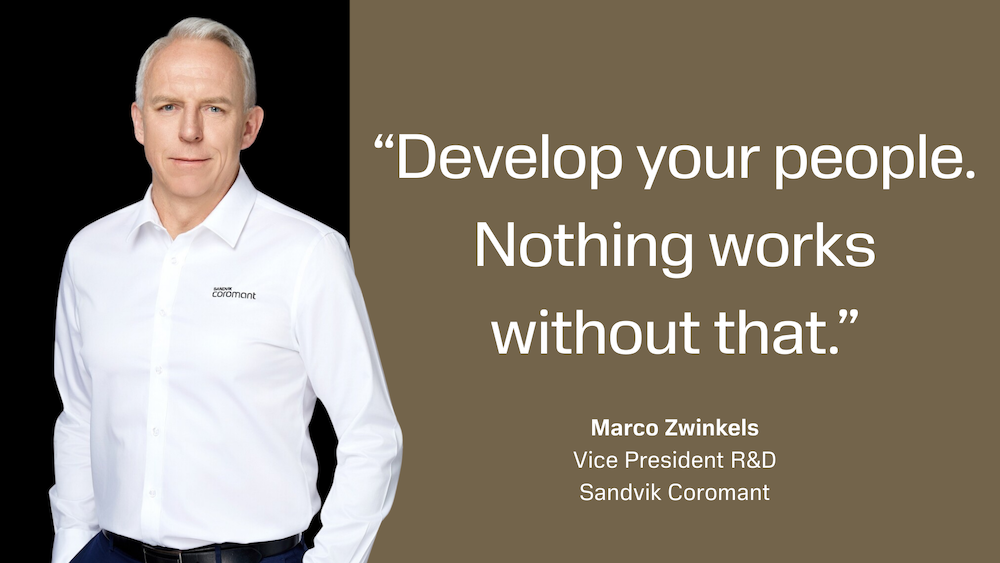
To offer insight into what this looks like in practice, Marco Zwinkels, Vice President of R&D at Sandvik Coromant, shares his perspective on the dynamics that drive innovation forward.
It’s much more than the final product
R&D is inherently different. It’s unwieldy by nature, resisting shortcuts and defying simplification. As the lifeblood of engineering, it cannot be confined to a single tool, method, or process. It’s a living, evolving practice — restless, iterative, and always pushing boundaries.
So when we talk about R&D, we don’t start with tools. Great stories rarely begin by announcing the end, and the R&D department understands this better than anyone.
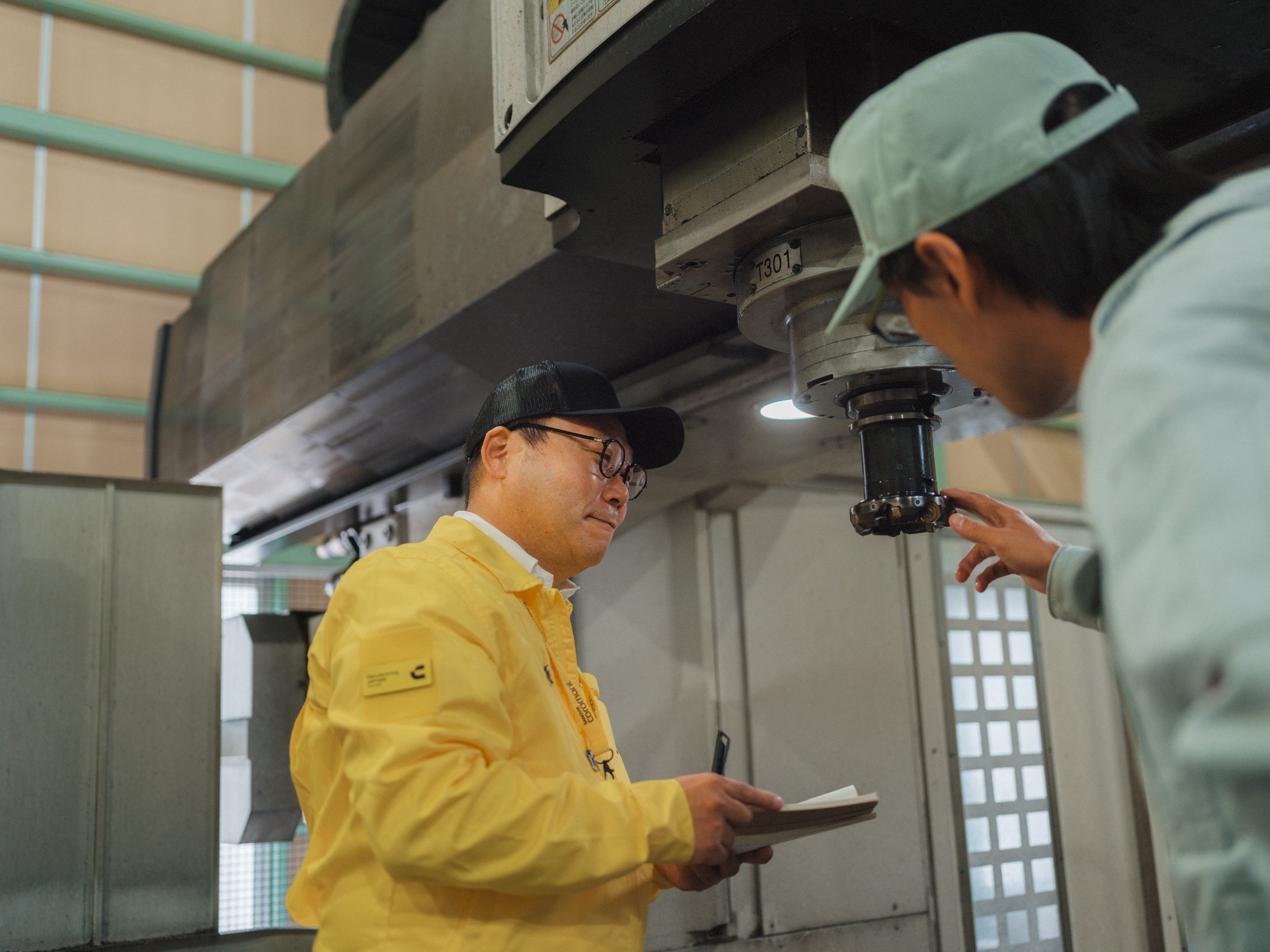
A part of Sandvik since 1997, Marco Zwinkels’ experience spans the globe and the inner workings of the industry, from R&D to sales and back again. As the new Vice President of R&D at Sandvik Coromant, he brings a vision of innovation that is as grounded in reality as it is driven by engineering ambition.
“It’s much more than the product,” he says. “Sometimes it’s about cost performance, other times it’s about the wider manufacturing economics. Not everyone reasons the same way.”
What Marco’s years in sales taught him is that performance alone rarely tells the full story. Some organizations prioritize productivity-based thinking, while others focus on engineering, support, or quality. Finding the right balance is essential, and recognizing these differences is key to effective R&D.
“That’s where I think my sales experience helps. It clarifies who we should work closely with, and which projects make sense for co-developing solutions that can later scale to a broader market.”
Moving fast without breaking things
R&D operates in a constant tension between long-term platform development and immediate demands. Hardware-led innovation simply doesn’t move at the same pace as software.
“We will always have lead times,” he says. “You need prototypes, testing, and validation, especially when the risk is high.”
For core technologies that underpin large parts of the business, a traditional development approach remains essential. However, in smaller, more targeted areas, he sees opportunities to move faster: implementing, launching, learning, and scaling.
“There is a lot of innovation happening every day. The question is how we can leverage it more systematically.”
The most rewarding projects often begin close to the customer, where engineers, application specialists, and technical teams solve real production challenges daily. The greater challenge lies in scaling those insights, turning local problem-solving into structured solutions that benefit a broader market.
Looking beyond the tools
Reflecting on nearly three decades at Sandvik Coromant, Marco observes a clear shift in how R&D operates.
Two decades ago, decisions often revolved around individual tools or machines. Today, manufacturers take a more holistic approach, evaluating productivity, sustainability, resilience, and total operational impact across the entire factory. Tool performance alone is no longer the sole differentiator.
“When you look at the full picture, we are clearly invested in raising industry standards as a whole,” he says.
This is why innovation must extend beyond performance metrics. It requires integration across systems, services, and support, along with a deeper understanding of how every component contributes to long-term competitiveness.
Thinking about the whole factory
This broader perspective is why Marco sees strong value in the manufacturing wellness mindset.
Having presented it to customers — particularly in China — he’s witnessed how it elevates conversations beyond tools, speeds, and feeds.
“Looking at the factory holistically is becoming more common in our conversations with customers”, he says.
Manufacturing wellness helps frame these discussions, shifting the focus from individual products to systems, and from components to outcomes.
“It brings value and it aligns with what we believe manufacturing should be.”
Nothing works without developing your people
When asked to choose a favorite manufacturing wellness habit, Marco doesn’t hesitate.
“Develop your people. Nothing works without that.”
He believes that learning and relearning are no longer optional for employees, customers, or the industry as a whole. Many skills that once defined expertise are being reshaped by technology, automation, and AI.
“What matters is giving people the opportunity to grow in this new context,” he says.
This challenge is global. Even in markets assumed to have abundant labor, like China, manufacturers struggle to attract and retain skilled workers. Younger generations are less inclined to work in industry, accelerating the shift toward automation while increasing the need for highly capable people who can adapt and think across systems.
“It’s not just about machines replacing people. It’s about people doing different, more advanced things.”
Mapping the way forward
Success in R&D is often associated with big breakthroughs, but in reality, it comes from continuous improvements: faster development cycles, shorter time to market, and closer alignment between engineering and real-world application.
What remains unchanged is the intent. For Marco Zwinkels, R&D isn’t about technology for its own sake; its purpose is to understand customers deeply enough to build solutions that truly matter.
Our innovations
The best place to read more about our unique innovations within tooling, methodologies, and systems. chevron_right
